
RESEARCH TEAMS
There are 6 research teams at HydroSciences Montpellier
ContEm : Emerging Contaminents
Keywords: persistent and emerging organic contaminants, metabolomics, targeted and untargeted analysis, OMICs, reuse, health risks, environmental risks, passive sensors
Overview: The team's research focuses on anthropogenic organic contaminants (persistent and emerging), the identification of contamination sources (environmental diagnosis using innovative sampling and measurement methods), their fate in the water cycle (transfer and transformation), the characterization of environmental exposure, and the associated environmental and health impacts. The contaminant, as the starting point for our scientific inquiry, leads us to investigate: i) the uses of water as a vehicle for exposure, ii) the transformations of contaminants in different contexts, iii) the detailed characterization of exposure in organisms and populations (including humans), and finally, the determination of the modes of action of these contaminants at the molecular level. Our activities range from fundamental, methodological, and innovative research to teaching.
Responsible : Elena GOMEZ
Our research activities are focused on the following themes (figure 1):
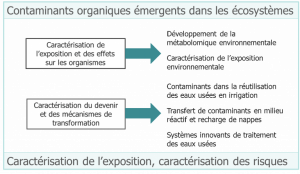
- the characterization of organisms’ exposure to contaminants through water, their bioavailability and the elucidation of potential effects (particularly through the development of non-targeted and metabolomic approaches) including the identification of environmental and health risks by pharmacological approach (based on evolutionarily conserved signaling).
- the characterization of relevant environmental transformation mechanisms, including those giving substances a potentially toxic character (for example in the context of wastewater reuse) and the distribution and transfer between different environmental compartments.
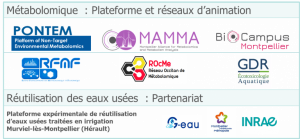
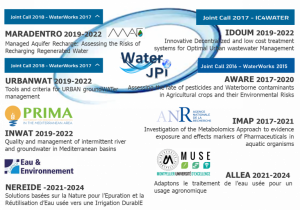
And through a strong presence on the Montpellier site through the support and development of the non-targeted environmental metabolomics platform (PONTEM) within the alliance for metabolomics and metabolism analysis (MAMMA) hosted by the UMS BioCampus in Montpellier as well as through our involvement on the treated wastewater reuse platform, hosted by the UMR G-eau (figure 3)
Members of the ContEm team
| | |||
| Name | First name | Guardianship | Trade |
| BELDA | Emmanuelle | UM | |
| BERTRAND | Marine | IMT | TECH |
| CHIRON | Serge | IRD | DR |
| COURANT | Frederique | UM | MCF |
| DUPORTE | Geoffroy | UM | MCF |
| ESCANDE | Aurelie | UM | MCF |
| FENET | Helene | UM | PR |
| GOMEZ | Elena | UM | PR |
| LACRAMPE | Nathalie | CNRS | IE |
| LESTREMAU | Francois | IMT | MCF |
| MATHIEU | Olivier | CHRU | |
| ORANGE | Didier | IRD | CR |
| RAFFALLI | Josiane Emma | UM | |
| ROSAIN | David | UM | TECH |
| SAUVETRE | André | IMT | MCF |
| TEISSEIRE | Marie-Laure | UM | |
| ZNIDAH | Abdelkader | UM | TECH |
| | ||
| Name | First name | Research Topic |
| BELDA | Emmanuelle | PAST |
| RAFFALLI | Josiane Emma | PAST |
| TEISSEIRE | Marie-Laure | PAST |
| CABARET | Gaëlle | BIOCAMPUS |
| OLOU | Armel Boris | projet BIOBEN - financement CAMPUS FRANCE |
| AYDI | Aline | TECH BAP J |
| | |||
| Name | First name | Thesis | Directors |
| Ben-Haj-Amor | Nadra | Impact of soil macrofauna on microbial biodiversity for the optimization of enhanced self-purification in macrophyte-planted filters | ORANGE Didier SAUVETRE André |
| Gabard | Martin | Contribution of PNTs to the aquatic exposome: diagnosis and treatment of water resources intended for human consumption | GOMEZ Elena |
| MOINARD | Estevan | A COMPLETER - modifier éventuellement nom directeur - Elise | FENET Helene DUPORTE Geoffroy |
| VOILAND | Anna | Contribution of PNTs to the aquatic exposome: diagnosis and treatment of water resources intended for human consumption | LESTREMAU Francois |
| | ||
| Name | First name | Function |
HEC: Hydrology, Ecohydrology, Climate
Project Managers: Nanée Chahinian, Jérôme Demarty
Keywords : Hydrology, Eco-hydrology, Climate, Extreme events, Drought, Soil-Plant-Vegetation-Atmosphere continuum, Modeling
Overview:
Hydrology, Eco-hydrology, Climate, Extreme events, Drought, Soil-Plant-Vegetation-Atmosphere continuum, Modeling
She focuses on:
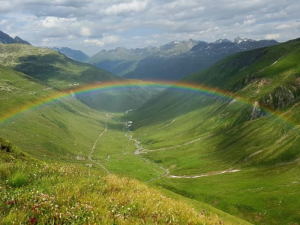
To improve the understanding and characterization of interactions between phenomena, hydrological, ecohydrological and atmospheric processes in tropical, subtropical and Mediterranean environments.
Promote the translation of knowledge into statistical, conceptual and/or physically based models applicable over a wide range of spatial and temporal scales.
Goals :
HEC structures its research problems around five main areas:
Interaction of the water cycle – eco(hydro)systems in rural areas (temporal dynamics, land uses);
Interaction of the water cycle – eco(hydro)systems in rural areas (temporal dynamics, land uses);
Surface-atmosphere interactions through energy and matter exchange and isotopic tracing of water (soil-vegetation-atmosphere);
Impacts of the variation of climatic and anthropogenic conditions on the functioning of eco-hydro-systems and their components;
Analysis of hydrological extremes and their impact on water and matter flows (soil-vegetation-atmosphere).
Its study sites are part of labeled observatories in the North (SO MEDYCYSS, OHM-CV) and in the South (SNO AMMA-CATCH, SNO OPAR) as well as ZABR and "Mediterranean coastal basins" workshop areas
Members of the HEC team
| | |||
| Name | First name | Guardianship | Trade |
| BOUVIER | Jean christophe | IRD | DR |
| CARRIERE | Simon | IRD | DR |
| CHAHINIAN | Nanée | IRD | CR |
| COUSQUER | Yohann | UM | MCF |
| DEMARTY | Jerome | IRD | CR |
| DEZETTER | Alain | IRD | CR |
| ETCHANCHU | Jordi | IRD | IR |
| FAURE | Alice | IRD | IR |
| GENTHON | Pierre | IRD | DR |
| JOHANNET | Anne | IMT | PR |
| MAHE | Gil | IRD | DR |
| MAINASSARA | Ibrahim | IRD | TECH |
| NEPPEL | Luc | UM | MCF |
| OLLIVIER | Chloé | IRD | IR |
| PATRIS | Nicolas | IRD | IR |
| PEUGEOT | Christophe | IRD | CR |
| ROUCHÉ | Nathalie | IRD | IE |
| ROUSSEAU | Marine | UM | MCF |
| RUELLAND | Denis | CNRS | IR |
| SIVELLE | Vianney | CNRS | CR |
| VIMEUX | Francoise | IRD | DR |
| WENDLING | Valentin | IMT | IR |
| | ||
| Name | First name | Research Topic |
| LOISEAU | Bertille | Etude écohydrologique des intéractions végétation/eau souter |
| WIJMER | Taeken | |
| NOIRMAIN | Fanny | Acquisition et traitement des données du réseau de tour de f |
| FARHANI | Nesrine | Bourse CNES |
| KOUKOUI | Renaud | CDD IR - Acquisition et traitement des données du réseau de |
| VIDAL | Jules | ANR LUCAS |
| LAWSON | Fabrice Amen Messan | ANR ThipHyc |
| FRANCA ARAUJO DE MELO | Pedro | IE - Modélisation hydrologique |
| FRANCA ARAUJO DE MELO | Pedro | |
| COLLET | Léna | Impat des changements globaux sur les ressources en eau et v |
| RAYNAUD-SCHELL | Brune | Modélisation des transferts d'énergie e d'eau en région médi |
| LIU | Haoming | |
| | |||
| Name | First name | Thesis | Directors |
| COLLET | Léna | Evolution of hydrological and plant resources in the agropastoral Sahel under climatic and anthropogenic constraints | DEMARTY Jerome |
| MONDON | Lucas | Estimating the amount of water available to trees in forest soils using near-surface geophysics and water isotope tracing | CARRIERE Simon |
| RAYNAUD-SCHELL | Brune | Contributions of remote sensing to constraining the modeling of eco-hydro(geo)logical processes in the Mediterranean karst region | DEMARTY Jerome LEONARDI Veronique |
| VAUCLARE | Simon | Hydrogeology Senegal | CARRIERE Simon |
| | ||
| Name | First name | Function |
| HAYATI | Assia | |
| KHAN | Fahad | Projet STARWARS |
| FRONTINI | Francesca | Projet STARWARS |
| DEMARQUE | Mia | |
| CARDILLO | Franco Alberto | Projet STARWARS |
| DEBOLE | Franca | Projet STARWARS |
| NAHLI | Ouafae | Projet STARWARS |
| NASRI | Nesrine | |
HYTAKE: Hydrogeology and Transfers in Karstic and Heterogeneous Aquifers
Responsable : Christelle BATIOT-GUILHE
Keywords : Hydrogeology, Karst, Heterogeneous aquifers, Hydrodynamics, Hydrogeochemistry, Modeling, Multi-scale approach, Surface/subsurface interactions, Groundwater resource
Overview :
The HYTAKE team comprises 15 permanent members (approximately 10 FTEs), primarily faculty members affiliated with the University of Montpellier and IMT Mines Alès, as well as CNRS and IRD researchers and two associate researchers from the NRE team at BRGM in Montpellier. This team is heavily involved in local, national, and international observation structures and networks (OSU OREME, SNO KARST and IR OZCAR, Theia and eLTER data hubs; the ZABR “Cévennes Rivers” research site, LMI CocysMed). In addition to a network of academic partners in France and abroad, the HYTAKE team has also cultivated collaborations for many years with private companies and local authorities in the field of water resources and the relationship between groundwater and surface water, as well as industrial partnerships (Danone, TOTAL, ORANO, etc.). This team is also heavily involved in the administration and management of training programs in France: Earth Water Environment Bachelor's degree, Water Sciences Master's degree from the University of Montpellier, Engineering programs at IMT Mines Alès, as well as internationally focused programs (International Master's WISE).
Goals :
The work of the HYTAKE team focuses on improving knowledge and modeling the structure of heterogeneous aquifers (multilayered sedimentary, volcanic, basement, karst, peridotitic/thermal) and associated transfer processes (flow, transport), at different time and space scales.
The sites studied are distributed under varied climatic, geological and physiographic environments, both in metropolitan France and overseas territories as well as in Africa, the Maghreb, Indonesia, New Caledonia and South America, thus allowing the development of robust tools and methodologies that can be generalized to other aquifers with comparable characteristics.
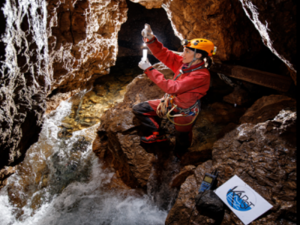
Field observation is one of the pillars of the approaches implemented. Several in situ “Laboratories” have been set up for the multi-scale analysis of transfers and flow properties in heterogeneous media: the regional scale observatory MEDYCYSS (OSU OREME/SNO KARST: https://sokarst.org/), as well as small-scale experimental sites (Terrieu, Rieu-Coulon and Sussargues sites, in partnership with TOTAL).
The varied and complementary expertise of the different team members allows the implementation of coupled approaches integrating geological, hydrodynamic, hydro(bio)geochemical information and machine learning approaches (in particular neural networks), with the aim of developing original characterization and modeling methodologies.
The team's research focuses on :
– to study the dynamics of recharging (event-based, seasonal, multi-year scales),
– to characterize the relationships between geological structures and hydrodynamic/hydrodispersive properties of heterogeneous aquifers, particularly in carbonate environments,
– to characterize and model the exchanges between groundwater and surface water, with a particular focus on the role of karst in flooding in Mediterranean watersheds,
– to characterize and estimate the impacts of climate change and anthropogenic pressures on water resources, both from a quantitative and qualitative point of view, and the resilience of hydrosystems.
The HYTAKE team thus works on surface-subsurface interface processes and actively participates in the cross-cutting theme of the UMR "Characterization and Modeling of the ecohydro(geo)logical functioning of the Critical Zone", one of whose objectives is to improve the integrated understanding and modeling of transfer processes in a continuum between the various compartments of the Critical Zone.
Members of the HYTAKE team
| | |||
| Name | First name | Guardianship | Trade |
| BONDU | Raphaël | UM | MCF |
| BRUNET | Pascal | CNRS | IE |
| CARRIERE | Simon | IRD | DR |
| COUSQUER | Yohann | UM | MCF |
| DE MONTETY | Veronique | UM | MCF |
| GUILHE-BATIOT | Christelle | UM | MCF |
| GUINOT | Vincent | UM | PR |
| JOHANNET | Anne | IMT | PR |
| JOURDE | Herve | UM | PR |
| LACHASSAGNE | Patrick | IRD | DR |
| LEONARDI | Veronique | UM | MCF |
| LERAY | Sarah Tiphanie Lucile | CNRS | DR |
| MARCHAND | Pierre | IRD | IE |
| PATRIS | Nicolas | IRD | IR |
| PISTRE | Severin | UM | PR |
| ROUSSEAU | Marine | UM | MCF |
| SIVELLE | Vianney | CNRS | CR |
| TOULIER | Alix | IRD | CR |
| TUNQUI NEIRA | José Manuel | IMT | MCF |
| | ||
| Name | First name | Research Topic |
| ERGUY | Manon | |
| ATTAR | Oumaima | CDD CH - ANR EMPOWERMED |
| HAYOUNI | Wafa | |
| KHMILA | Khaoula | Hydrochimie / Hydrogéologie/Karst |
| TURBA | Lou-ann | Reliquats projet CLIMEAU |
| LECLERC | Alexandre | projet astientoi |
| | |||
| Name | First name | Thesis | Directors |
| AL-JARJEES | Sarah | Advancing Hydrological Understanding for Sustainable Water Resource Management in the context of climate change in Iraq | PISTRE Severin |
| BALLE | Benjamin | Distributed modeling of hydrodynamics and flow rates at the different outlets of a Mediterranean karst aquifer. | JOURDE Herve |
| BEDJIL | Houa | Statistical learning for seasonal piezometric level forecasting | JOHANNET Anne |
| BEN IHLAL | Nohaila | Multi-scale analysis of the impacts of morphotectonic structures on the vulnerability and renewal of peri-Mediterranean karst groundwater in the Middle Atlas of Morocco | LEONARDI Veronique |
| ECHAT | Samuel | Impact of salt tectonics on the functioning and quality of karst groundwater resources (example of the Oum Er-Rbia springs, Middle Atlas Morocco) | LACHASSAGNE Patrick LEONARDI Veronique |
| FABRE | Enola | Sustainability of drinking water supply in two Mediterranean metropolises in the context of climate change: Beni Mellal (Oum Er Rabia Basin, Morocco) and Montpellier (Lez Basin, France) | JOURDE Herve |
| HELA | Séjine | The feasibility study of the reuse of treated wastewater in agriculture in the Grombalia region: an approach integrating multi-criteria analysis, GIS and hydrogeological modeling. | PISTRE Severin |
| JOUANNEAU-COUVRET | Sayane | Contribution of Artificial Neural Networks to the reconstruction of piezometric records from meteorological data with a view to improving the Karst Flood Evaluation Method (MECK) developed by the CEA | PISTRE Severin JOHANNET Anne |
| KINGLO | August Abdon | Exploitation of basement aquifers in West Africa: regionalization of limits and potentials imposed by the environment | LACHASSAGNE Patrick LACHASSAGNE Patrick |
| KOUAIED | Amal | Evaluation of water resources of the Aoussj Ghar El Melh aquifer system: Impact of climate change and mapping of vulnerability to pollution. | PISTRE Severin |
| LAVIE | Théo | Mayotte | LACHASSAGNE Patrick |
| MOSTAFA FARAJ MOSTAFA | Mohamed | Hydrogeology of coastal areas affected by saline intrusion | JOURDE Herve LACHASSAGNE Patrick |
| PEYRIERE | Hugo | Quantification and Simulation of the Support of Mediterranean Karsts at Low Water Levels | GUILHE-BATIOT Christelle COUSQUER Yohann |
| RAYNAUD-SCHELL | Brune | Contributions of remote sensing to constraining the modeling of eco-hydro(geo)logical processes in the Mediterranean karst region | DEMARTY Jerome LEONARDI Veronique |
H2U : Urban Hydrology and Hydraulics
Manager : Christian SALLES
Keywords : Runoff and flooding, transfers, hydrological hazards, coastal cities, African metropolises, modeling, metrology and sampling, remote sensing and geomatics, non-parametric statistics and extreme values, artificial intelligence and data mining, aggregation/disaggregation
Overview :
In urban areas, the sealing and artificialization of surfaces exacerbate stormwater runoff and leaching processes. The flow of water through the urban environment is facilitated by networks such as roads, stormwater drainage systems, and watercourses; but it is also diverted or slowed by buildings, urban infrastructure, and low-impact stormwater management systems. The dynamics of water and sediment transfer in an urban catchment area depend on the spatiotemporal distribution of rainfall combined with the hydrological connectivity of the urban fabric and its infrastructure. The H2U team's research focuses on runoff in urbanized environments with the aim of improving the understanding and management of hydrological hazards, flooding, and the associated transfer of sediment and pollutants.
The questions addressed in this context concern the characterization of forcing factors and the parameterization of the environment, as well as the identification and development of robust and rapid hydrological, hydraulic, and coupled hydrology/water quality models for crisis management and the evaluation of development and change scenarios. The methodologies rely on metrology and non-parametric and extreme value statistics, remote sensing and geomatics, and modeling of flows and associated transfers in heterogeneous environments.
This involves: (1) developing statistical and disaggregation methods to better define the spatio-temporal fields of precipitation at the urban agglomeration scale by following two approaches: observation and statistical characterization of the structural properties of rainfall based on scaling laws, and the development of methods for disaggregating rainfall fields to hectometric scales; (2) applying data mining and text analysis techniques to open documents and databases to refine the parameterization of the models. (3) To continue the development of hydrological (ATHYS platform) and hydraulic (SW2D platform) models by following two approaches: regionalization of conceptual model parameters and macroscopic porosity models using the statistical properties of the urban fabric. (4) To implement coupled hydrology/water quality models adapted to the temporal and spatial scales of urban processes in order to assess the role of combining management structures and to study the foreseeable evolution of transfers at the integrated scale within a context of change.
Les développements méthodologiques et les modélisations s’appuient sur et alimentent les actions d’observation de l’Observatoire Urbain d’HSM qui compte deux sites : au Nord, le bassin versant urbain du Verdanson et plus largement le territoire du fleuve côtier Lez (traversant Montpellier) et ses affluents ; en miroir, au Sud dans le District d’Abidjan (Côte d’Ivoire) le bassin versant périurbain de la lagune Aghien et le bassin urbain Riviera Palmeraie. Ces deux sites sont complétés par plusieurs chantiers dans des métropoles sahéliennes d’Afrique de l’Ouest (Bamako, Dakar, Djibouti, Fes, Ouagadougou, …) . L’ensemble décrit une variété de conditions climatiques et urbanistiques. Les actions d’observation et d’acquisition de données s’appuient sur les ressources et les compétences de l’Equipe Terrain.
Members of the H2U team
| | |||
| Name | First name | Guardianship | Trade |
| BOUVIER | Jean christophe | IRD | DR |
| CHAHINIAN | Nanée | IRD | CR |
| FINAUD-GUYOT | Pascal | UM | MCF |
| GUINOT | Vincent | UM | PR |
| LAPILLONNE | Suzanne | UM | MCF |
| LECLERCQ | Romain | IRD | CR |
| MAJDALANI | Samer | UM | MCF |
| MARCHAND | Pierre | IRD | IE |
| MONTOYA-CORONADO | Violeta | UM | MCF |
| NEPPEL | Luc | UM | MCF |
| PERRIN | Jean Louis | IRD | CR |
| SALLES | Christian | UM | MCF |
| TOURNOUD | Marie-George | UM | PR |
| | ||
| Name | First name | Research Topic |
| VIDAL | Jules | ANR LUCAS |
| GAIGNON | Michaël | suite du VI |
| | |||
| Name | First name | Thesis | Directors |
| AELAMI | Mitra | Etude du risque d’inondation urbaine par réseau de neurones et impact d’événements pluvieux spatio-temporels extrêmes | GUINOT Vincent |
| AH-WOANE | EMMANUEL | Modélisation hydrologique et hydraulique de l'impact d'actions anthropiques en milieu cultivé sur la genèse de crues | MAJDALANI Samer |
| GAUSS | Kevin | MODÉLISATION MULTI-ÉCHELLES ET MULTISOURCE DES INONDATIONS URBAINES | GUINOT Vincent CHAHINIAN Nanée |
| KONE | Aissatou Ghislaine | PERRIN Jean Louis | |
| KOUACOU | Bérenger | Systèmes d'Alerte Précoce aux Inondations en Afrique de l'Ouest - Utilisation de Nouvelles Approches d'Intelligence Artificielle et de Réseaux Neuronaux | PATUREL Jean Emmanuel |
| Kouassi | Aimé | Amélioration de la gestion des risques liés aux pluies extrêmes infra-journalières : Actualisation des courbes Intensité-Durée-Fréquence et développement de modèles de pluie de projet en Côte d'Ivoire | PATUREL Jean Emmanuel |
| | ||
| Name | First name | Function |
| BALBINO | Kaouana | |
| DELANNOY | Aurelien | |
| BOUTIN | Louis | |
PEnSTER : Pollution, Environment, Health, Territories
Responsible : Corinne CASIOT
Keywords: (organo)metallic contaminants, metalloids, biogeochemical cycles, exposure, health, populations, impacts, bioremediation, microbial ecotoxicology, environmental genomics, circular economy, isotopic tracing, speciation, mining environments, watershed-coastal continuum.
Overview :
The development of decarbonized energy sources, the industrial catch-up of emerging countries, and the explosion of new technologies have resulted in an intensification of metal use worldwide. Their dispersal in the environment raises crucial questions regarding their impacts on water resources and health. Therefore, controlling metal pollution remains a major sustainable development challenge, an essential condition for improving health (SDG 3), protecting ecosystems (SDG 15), improving access to good quality water (SDG 6), and promoting the transition to a circular economy (SDG 12).
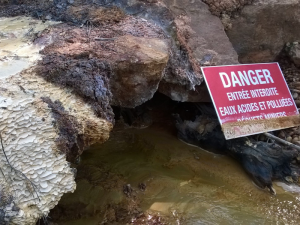
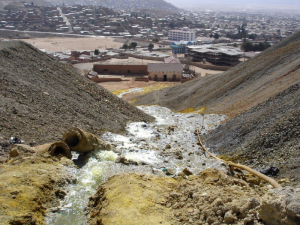
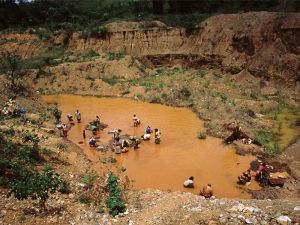
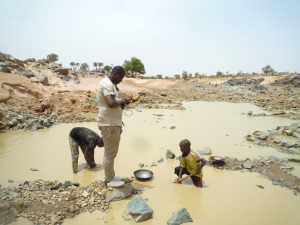
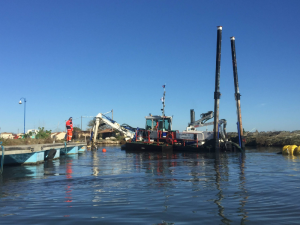
The research of the PEnSTer team is focused on metallic and organo-metallic pollution, from the study of transfer processes to the aquatic environment to the analysis of effects on microbial communities, the assessment of human exposures and the study of health impacts.
The PEnSTer team brings together geochemists, microbiologists, epidemiologists and circular economy specialists from the CNRS, IRD, University of Montpellier and IMT Mines Alès.
Goals :
- decipher the biogeochemical processes controlling the mobility of metals, metalloids and organometallics and the dynamics of microbial communities; exploit some of these processes in bioremediation.
- document environmental exposures to toxic metals and metalloids and assess their impact on the health of human populations using an epidemiological approach.
- develop methodologies to analyze and assess the pressures and impacts associated with pollution at the territorial level.
develop tools and methods for knowledge transfer to collect representations and practices of contaminated territories and to co-construct solutions to strengthen the capacity of local stakeholders to address these issues.
Our research focuses on sites with specific challenges (mining environments, urban, industrial and port environments, coastal lagoons) distributed within three major geographical areas: the Mediterranean region, West Africa and South America.
Our projects rely on state-of-the-art analytical platforms for the (bio)geochemistry of trace metal elements (speciation and isotopy of metals and metalloids, environmental genomics) involved in the national RéGEF network (CNRS/INSU): the ABIHS platform (HSM) and the AETE-ISO platform (OSU OREME).
The team is involved in regional, national and international networks and observatories (OSU OREME, OHM LM, ZABR, LMI MINERWA, LMI COSYS-MED II, Micro-ToxBol Network, AMEDEE, IMGA, AFEM, Ecotoxicomic) and in two IMT chairs (Mineral Industry and Territories Chair and ELSA PACT2). It works in collaboration with private companies and local authorities in the field of bioremediation, coastal management and the circular economy.
Members of the PEnsTER team
| | |||
| Name | First name | Guardianship | Trade |
| BRUNEEL | Odile | IRD | DR |
| CADOT | Emmanuelle | IRD | CR |
| CASIOT-MAROUANI | Corinne | CNRS | DR |
| CERCEAU | Juliette | IMT | MCF |
| DELPOUX | Sophie | CNRS | IE |
| DESOEUVRE | Angelique | CNRS | IE |
| FREYDIER | Remi | CNRS | IR |
| GARDON | Jacques | IRD | DR |
| HERY | Marina | UM | MCF |
| JUILLOT | Farid | IRD | DR |
| JUNQUA | Guillaume | IMT | MCF |
| MARIE | Mylène | CNRS | AI |
| MONTIGNY | CHRYSTELLE | UM | PR |
| PUJALTE | Igor | UM | MCF |
| REMES BUSIAU | Aurore | CNRS | |
| RESONGLES | Eleonore | IRD | CR |
| | ||
| Name | First name | Research Topic |
| ROSE | Célia | ABIHS alternation |
| | |||
| Name | First name | Thesis | Directors |
| DELOMEL | Chloé | Territorial reallocation of reuse in Occitanie: assessment of impacts, benefits, and deployment prospects | JUNQUA Guillaume VINCHES Marc |
| DRUHEN-CHARNAUX | Chloé | Underground science fiction. The imagined futures of the use of the subsoil in France, an approach through participatory scripting. | VINCHES Marc |
| FLORES | Marizol | Transport of metals in mining watersheds in the context of climate change, the case of the Rio Pilcomayo (Bolivia). | RESONGLES Eleonore CASIOT-MAROUANI Corinne |
| HASHOUSH | Mahmoud | ExposUM Project - MATRIX 2 | CADOT Emmanuelle |
| KACHBOURA | Chaima | Study of the impact of human-made structures on the sedimentary dynamics of the lower Medjerda valley, Tunisia, and its coastal geomorphological entities in a context of climate change | MONTIGNY CHRYSTELLE |
| KHAZRI | Nadia | Study of the impact of sedimentary dynamics on the coastal ecosystem in a context of anthropogenic and climatic changes : The case of Ghar El Melh, Gulf of Tunis | MONTIGNY CHRYSTELLE |
| KOUADIO | Bertin Konan | Study of microbial communities in gold mining sites in Ivory Coast and Niger and their potential impacts on biomining and bioremediation | BRUNEEL Odile |
| VARLET | Vivian | Residential environment and the external exposome, the potential contribution of machine learning approaches | CADOT Emmanuelle |
| VIRY | Anouk | Karst microbial ecology and antibiotic resistance | HERY Marina |
| | ||
| Name | First name | Function |
PHySE : Waterborne Pathogens, Health, Environment
Responsible: Estelle JUMAS-BILAK, Patricia LICZNAR-FAJARDO
Keywords : Pathogens, spread, persistence, transmission, health risk, antibiotic resistance, aquatic ecosystems, prevention, public health.
Vision and activities :
Water, as an integrating system, is a key element in the emergence, spread, persistence, and transmission of pathogens. Human impact and the artificial modification of aquatic systems generate and can exacerbate new infectious risks. The objectives of the PHySE team's studies focus on analyzing the conditions affecting the transmission of waterborne pathogens to humans, which pose varying levels of public health risk, as well as the highly complex interactions between these two inseparable elements: pathogens and humans.
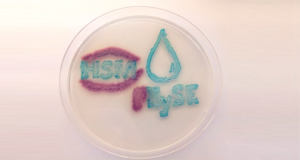
The diversity of pathogens and their vectors at the population and community levels remains the primary focus of PHySE's scientific research. The recent addition of virologists and a medical entomologist broadens the scope of PHySE's research, which was initially centered exclusively on bacteria.
The objects of study of PHySE can therefore be defined as waterborne infectious systems (WIS), addressed with an integrated approach combining activities around the vulnerability and artificialization of population ecosystems:
i) vulnerability of human populations (healthcare, cystic fibrosis, immune dysregulation, epidemics, the Global South) and vulnerability of eco-hydrosystems, especially in Mediterranean and African regions (karst, watersheds, coastal systems); and
ii) artificialization of living conditions and hydrosystems (urbanization, hospitals, homes).
These various contexts are studied through research projects in France and the Global South (Africa, Asia), where training and capacity building, teaching, workshops, observatories, surveillance networks, integration into health systems, and patient cohort monitoring are implemented. Structuring around these particular contexts allows in some cases to go as far as clinical-epidemiological studies and thus to propose a research strategy from the hydrosystem to human health with the long-term objective of establishing causal links and therefore being able to predict and prevent risks.
The phenomenon of resistance is a unifying research focus of PHySE, encompassing resistance to biocides, resistance to vector control methods, and antibiotic resistance. Antibiotic resistance, in particular, is a major public health challenge recognized as an obstacle to achieving Sustainable Development Goal (SDG) 3, related to human health. The connections between the challenges of resistance to anti-infective agents, water resource quality, global health, and the consequences in France and the Global South are clear priorities for global agencies and institutions.
PHySE a multidisciplinary team
Although specializing in infectious systems, the PHySE team is multidisciplinary with long-standing and highly recognized expertise in microbial and viral ecology and evolution, microbiology, virology, immunophysiopathology (dysimmunity), diagnostic methods and biosensors, medical entomology, epidemiology, infection risk prevention, vector control, clinical research, and the circular economy. This diversity, including healthcare professionals, enables synergistic actions, particularly to develop the common theme of "water-pathogens-humans in diverse ecological contexts."
Approaches :
The approach is essentially experimental, covering a wide range of technologies, and relies on the resources of the MicrobiH2O-Homme-HSM and Bio-Campus platforms, as well as on complementary technologies provided by our partners including:
i) the optimized detection, identification and quantification of pathogens by culturomics and of vectors by molecular approaches;
ii) the studies of microbial populations and communities by genetic, genomic, (exo)proteomic and phenotypic approaches;
iii) the evaluation of cellular and immune mechanisms in cellular and alternative models to provide diagnostic and therapeutic targets.
Members of the PHySE team
| | |||
| Name | First name | Guardianship | Trade |
| AUJOULAT | Fabien | UM | AI |
| BESSE | Alison | UM | MCF |
| BILAK | Estelle | UM | |
| CHIRON | Raphaèl | autre employeur | |
| COTTALORDA | Agnés | CHRU | PH |
| GRAU | Delphine | CHRU | PH |
| HANTOVA | Stefaniya | CNRS | AI |
| LECONTE | Nicolas | IRD | IE |
| MANGUIN | Sylvie | IRD | DR |
| MARCHANDIN | Helene | UM | PH |
| MASNOU | Agnes | UM | TECH |
| MOURLAN | Cécile | CHRU | PH |
| TOUBIANA | Mylene | CNRS | IE |
| VEAS | Francisco | IRD | DR |
| VO-HOANG | yen | UM | MCF |
| ZORGNIOTTI | Isabelle | UM | TECH |
| | ||
| Name | First name | Research Topic |
| ANDRIAMANGA | Vahiniaina | Waterisk Exposum UM |
| FAVIER | Camille | AHU of the CHU in fact |
| GROUSSET | Corinne | |
| HAMET | Jeanne | AI - Waterrisk |
| JEAN-PIERRE | Vincent | University Hospital PHU |
| KASRIEL | Astel | ATRF BAP A (Position S. Hantova) |
| LUCARZ-BRUNEL | Estelle | IE - contract on remaining EPIC CROWN project |
| | |||
| Name | First name | Thesis | Directors |
| CISSÉ | Namory | Role of aquatic environments in the antibiotic resistance cycle | LICZNAR FAJARDO Patricia |
| NARPON | Quentin | Multidisciplinary evaluation of malaria transmission and the effectiveness of LAV methods in the Balonbo region, Angola | MANGUIN Sylvie MANGUIN Sylvie |
| VIRY | Anouk | Karst microbial ecology and antibiotic resistance | HERY Marina |
| WEERAKOON | Sampath Nuvan | Diversity and spatial distribution of Anopheles vectors, along with the development of risk maps for simian malaria in the provinces of Songkhla and Satun, Southern Thailand | MANGUIN Sylvie |
| | ||
| Name | First name | Function |